
“Nonprofits” and “fundraising” have been closely connected for a long time. But the way nonprofits raise funds has changed significantly.
What used to be more traditional – big events with donors – has, over the years, transformed into something completely different.
Today, nonprofits prefer online or digital fundraising. They raise money through a fundraising platform where they can share their campaign story, add images and videos, offer rewards, and receive donations. All through one campaign page.
While this is a convenient way to raise funds, nonprofits often face a common challenge: doing it right.
Creating a campaign page and adding information and assets is not enough. There needs to be a holistic, comprehensive strategy behind running a digital fundraising campaign. Without it, this powerful tool doesn’t work as it’s supposed to.

Introducing the Growth Engine
The good news is that there is a proven methodology that helps nonprofits raise funds successfully again and again. And with every campaign, it becomes even more effective.
We’ve seen it work many times through our collaboration with nonprofits around the world, from animal shelters and humanitarian organizations to projects supporting art and culture.
We call this methodology the Growth Engine.
Before we dive into the six steps, there are two important things to keep in mind:
- This methodology should be customized to your specific nonprofit.
- It is a circular process. After step 6, you return to step 1, and with each cycle, the impact grows.
The 6 Steps of the Growth Engine
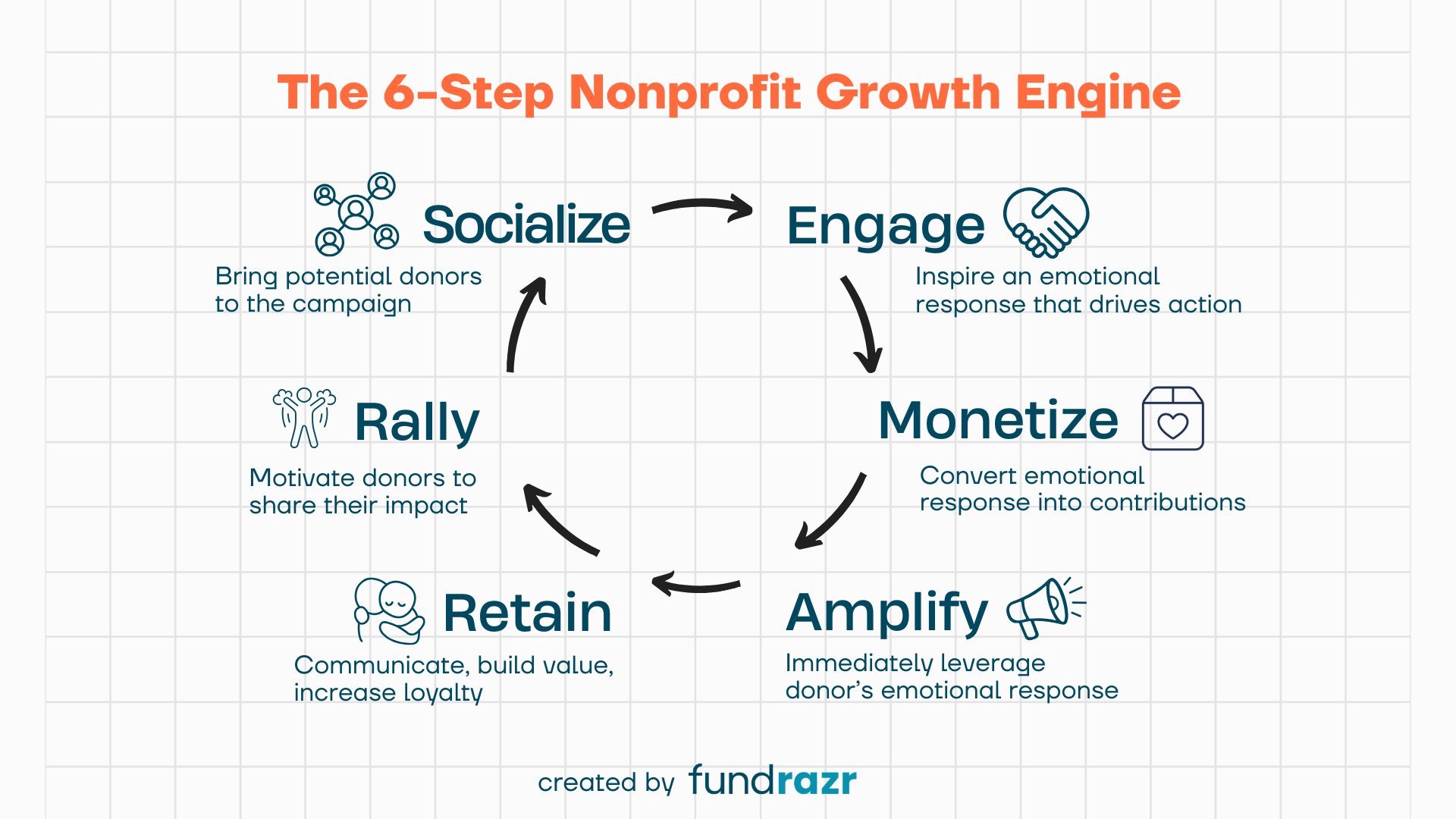
Step 1. Socialize
Let’s say your fundraising campaign page is ready to accept donations. What’s the first step?
Bring people to it.
In this stage, you leverage all possible channels in your arsenal:
- Your website
- Social media
- Email lists
- Closed communities
- Even your nonprofit’s physical space, if you have one
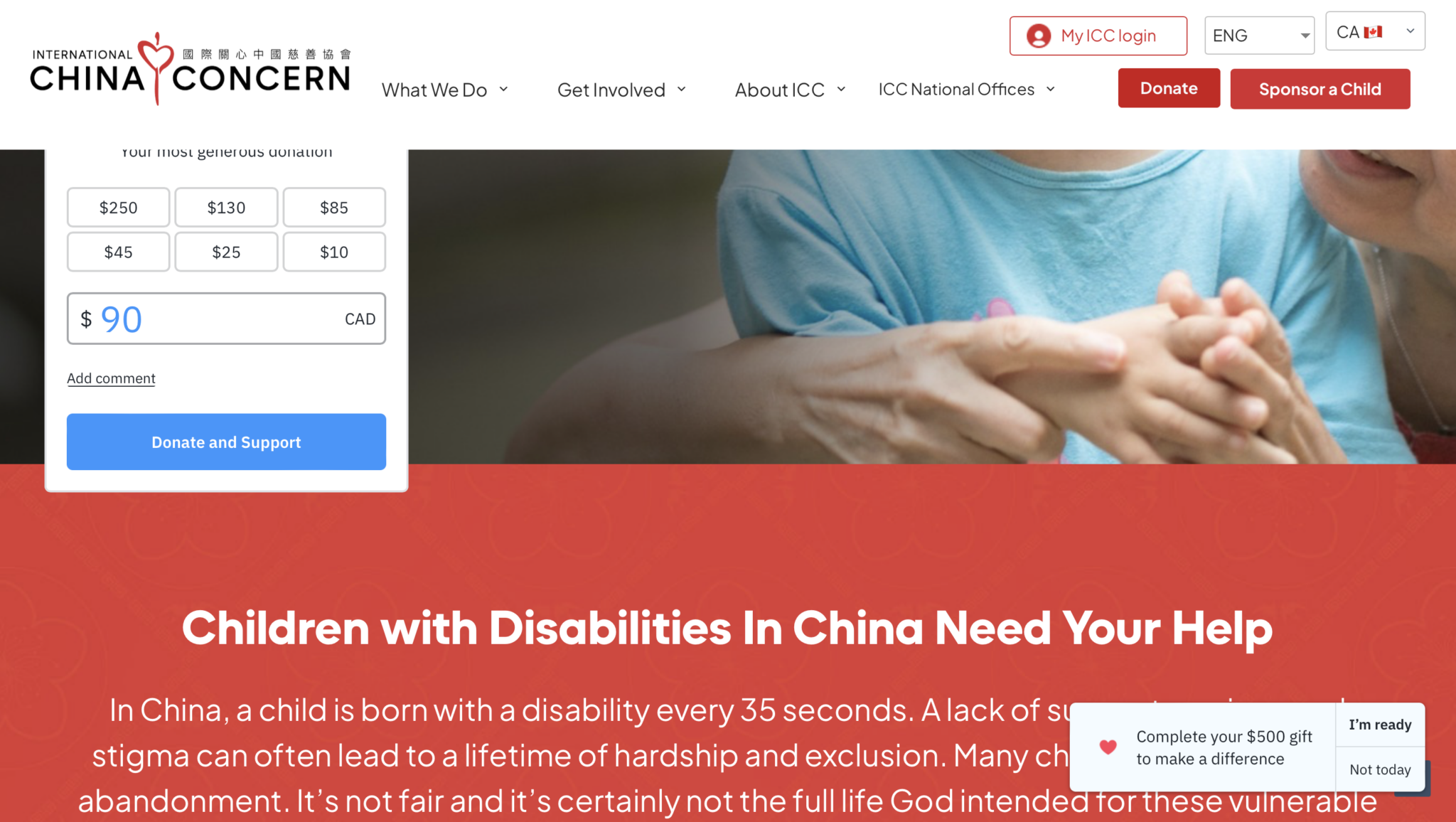
Example: International China Concern’s website with the Donation button and donation form, linking to their digital fundraising page.
On your website, you can place a banner announcing the campaign and directing visitors to your fundraising page. On social media, share posts daily and encourage people to join.
In other words, everyone in your circle should hear about your campaign, as often as possible.
It’s even better if you start before the campaign launches. This helps “warm up” potential donors so that when you go live, they’re ready.
Day 1 is especially important, it’s when excitement is highest and people are most willing to engage and donate.
For example, FundRazr allows potential donors to subscribe and receive a notification when your campaign launches. A countdown timer on your page can also help build anticipation.
Step 2. Engage
We hear the word “engagement” all the time, but what does it actually mean in fundraising?
How do you engage potential donors?
There’s no magical formula. It comes down to one thing: great storytelling.
The strongest stories aren’t about organizations—they’re about people. Start with a genuine need, reveal the solution, and show the difference donor support can make. When donors can clearly see their impact, they’re far more likely to engage.
That’s your key.
Keep it:
- Simple
- Genuine
- Emotional
Remember, your supporters want to be part of the story. Help them see how their generosity contributes to real change by connecting their gift to tangible outcomes and human experiences.
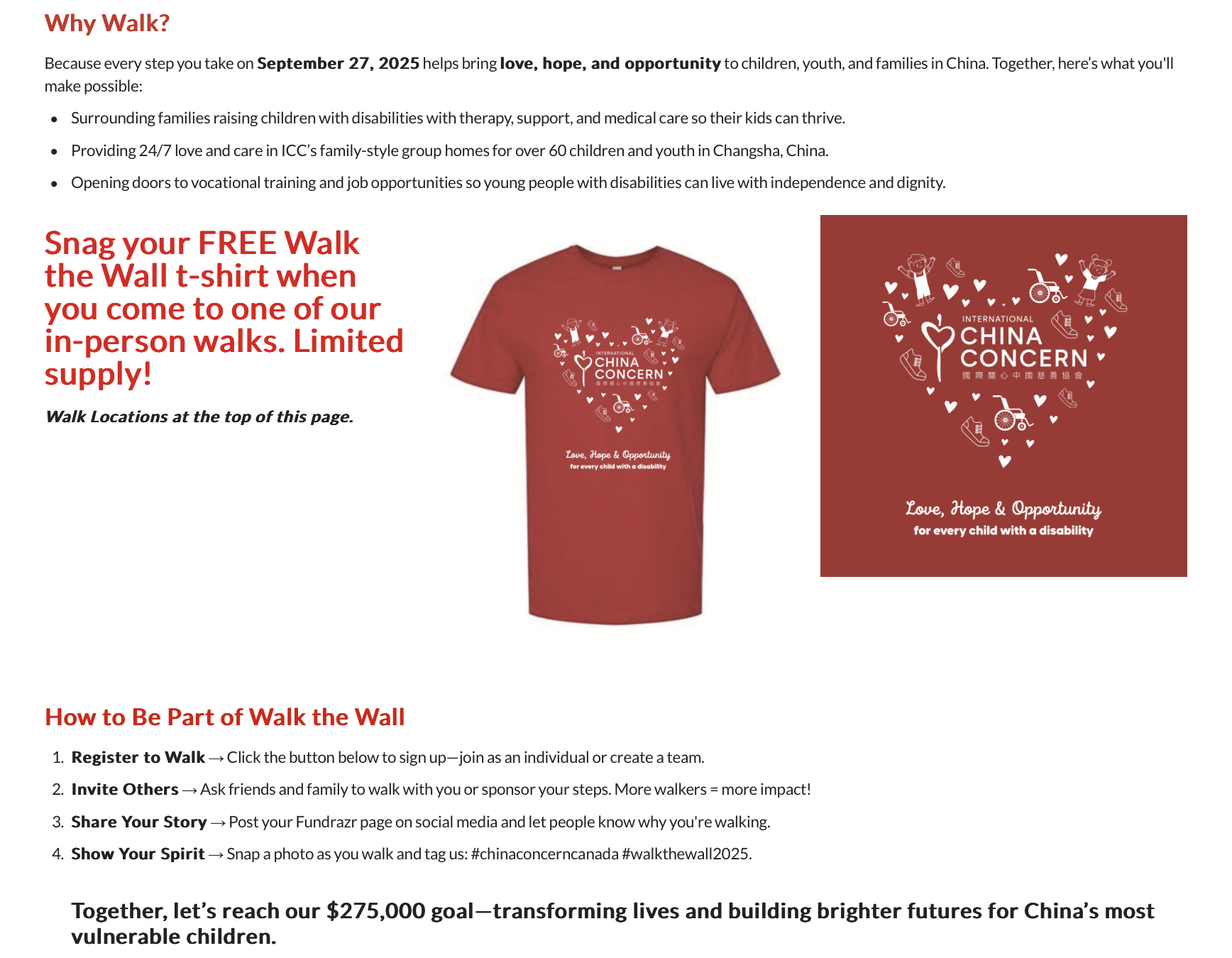
Example: International China Concern created an engaging story on their digital fundraising campaign page, including “Why Walk?” segment and adding the images of their reward.
Use engaging formats like:
- Short videos
- Bright images
- Storytelling techniques
Invest your resources in telling your story well, it makes all the difference.
Step 3. Monetize
Once you’ve brought people to your campaign and engaged them emotionally, it’s time to turn that connection into action.
How?
By showing the specific impact of their donation.
For example:
- “A $100 donation will provide a month’s supply of groceries for a family.”
- “A $500 donation will help buy 10 desks for a school.”

Example: International China Concern shares stories of specific kids and impact you can make.
Support this with:
- Real photos
- Personal stories
- Behind-the-scenes content
The more clearly you show the impact, the more likely people are to contribute.
Step 4. Amplify
After a donor contributes, they feel good, and there’s science behind it. Hormones like dopamine, oxytocin, serotonin, and endorphins are released when we help others.
This is your moment.
While they’re experiencing that positive feeling, ask them to share your campaign. This is how you amplify your reach. You’re no longer relying only on your audience, you’re also tapping into your donors’ networks.
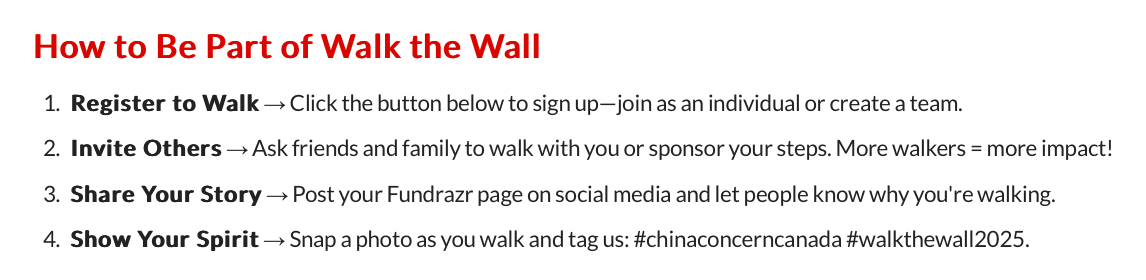
Example: International China Concern encourages their donors to share to amplify the effect of their donation.
Imagine if every donor shared your campaign with just 10 people. That’s powerful. But here’s the important part: people usually won’t share unless you ask.
So be clear and direct. Let them know how important sharing is for your cause.
Step 5. Retain
After a donation and a share, many nonprofits move on and focus only on finding new donors.
But skipping this step is a mistake. It’s crucial to follow up with your donors and show them the results of their contributions.
You can do this through:
- Campaign updates
- Emails
- Social media posts
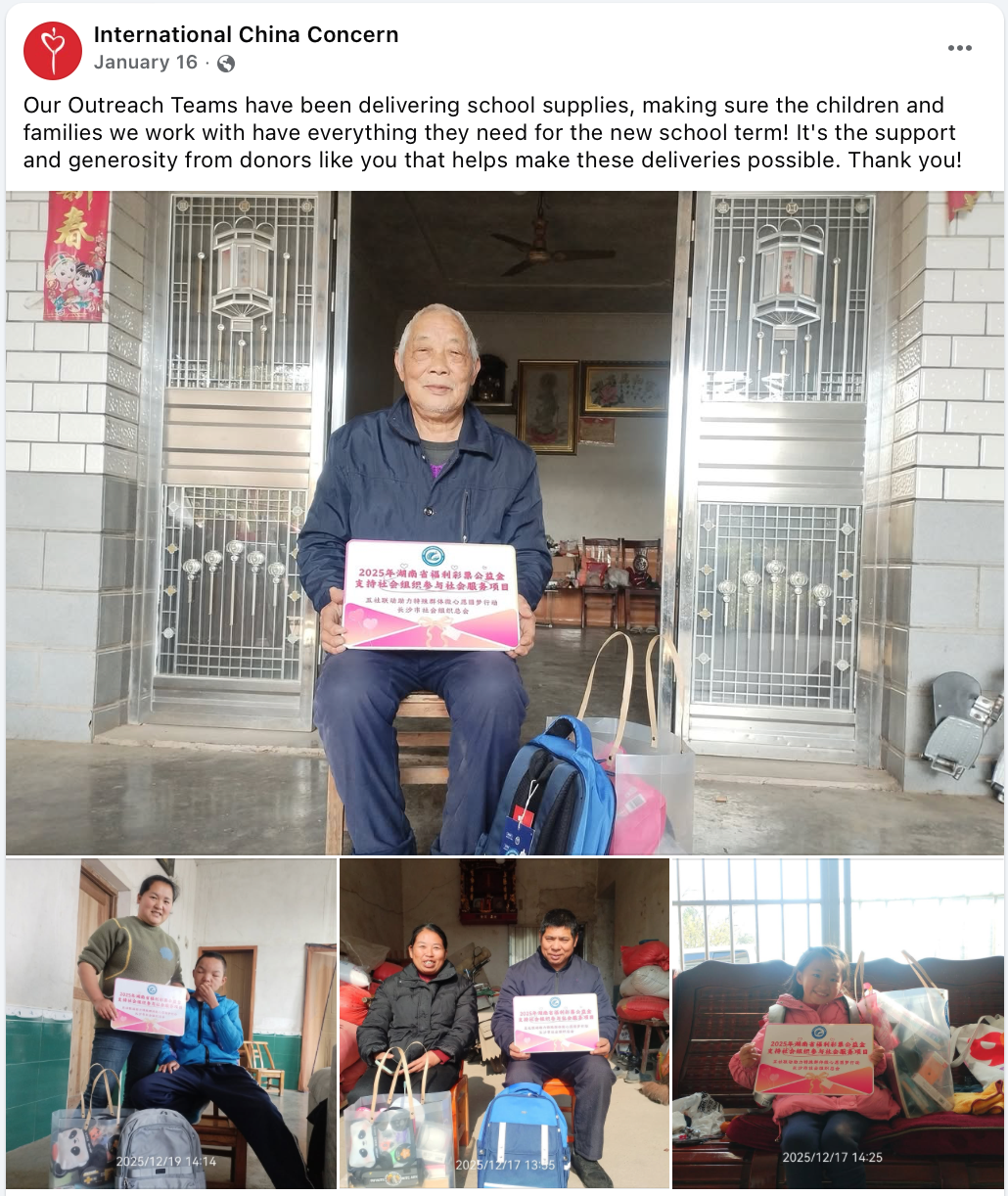
Example: International China Concern shares results of donations on their Facebook page.
FundRazr, for example, allows you to post updates and automatically notify your donors.
People want to see the outcome of their support. It builds trust, loyalty, and increases the chances they’ll contribute again in the future.
So keep them informed and build your donor community.
Step 6. Rally
After sharing updates, ask your donors to share again.
This time, they’re not just sharing that they donated, they’re sharing the impact of that donation.
This kind of communication is incredibly powerful because it comes from real people, not just your organization. It builds trust and sparks curiosity.
Your donors become your advocates, spreading your mission and bringing in new supporters.
These new supporters then enter Step 1, and the cycle continues.
Keep the Engine Running
Once you adapt this methodology to your nonprofit and find the right channels and stories, you can keep repeating the process.
With each cycle, you:
- Grow your donor community
- Increase trust
- Amplify your reach
- Run more successful campaigns
Final Thoughts
The Growth Engine is not just a set of steps. It’s a repeatable system for sustainable fundraising.
If this methodology resonates with you but you’re not sure how to apply it to your nonprofit, reach out to us – we’d be happy to help.