
Duty of Care Denied: Aid Workers’ Pursuit of Accountability
-----------------
Trigger Warning: Sensitive Content Ahead
This crowdfund page discusses topics that some readers may find disturbing, including torture, psychological trauma, and extreme
experiences as humanitarian aid workers in a conflict zone. Please proceed with caution if you are sensitive to these issues.
---------------
"Good intention is not enough, and we
want to be held accountable for our
actions.” – CADUS code of conduct.
An Appeal for Accountability and Justice
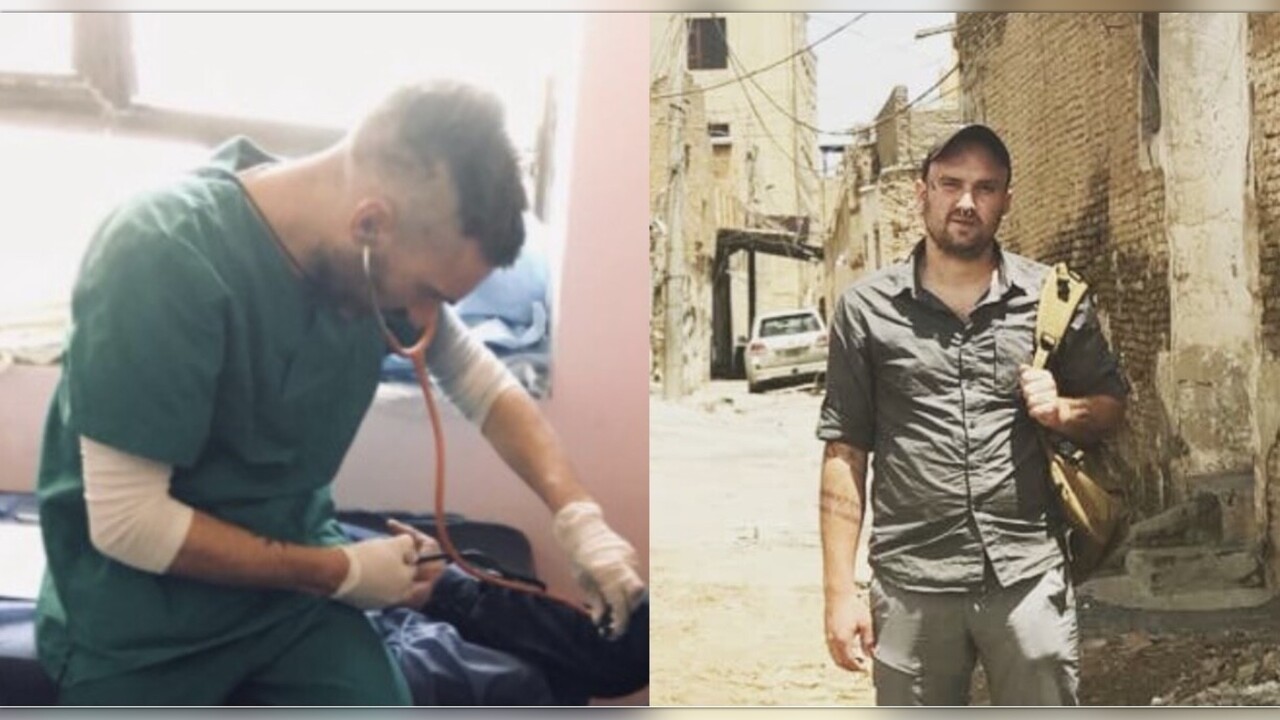
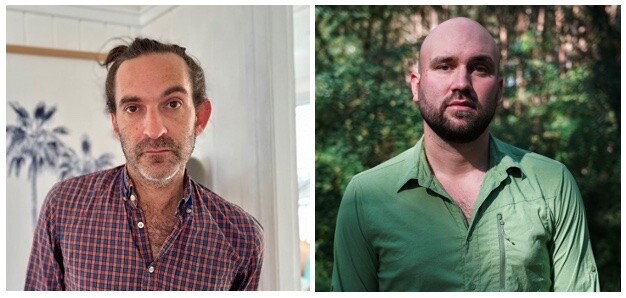
Hello. We are Simon Mauchline and Martin Lautwein. We were dedicated humanitarian aid workers who travelled to Syria in 2018 to provide humanitarian assistance. Instead, we ended up spending 48 days being tortured in a Syrian prison. We feel unsupported by the organization that sent us there and as a last resort, are now pursuing legal action for our losses.
We are seeking accountability and need your help to pursue our case in court.
Our Humanitarian Mission
In 2018, we were deploying to be on an assignment in Syria with the German NGO, CADUS e.V., to run a Trauma Stabilization Point (TSP) project to treat war wounded. This was six months after the project was designed and we were informed by the project coordination on the ground that fighting in the project area had stopped thus eliminating the justification for the project there.
Even without project arrangements finalized we, and the other medical team members arrived in Iraq mid-May, and waited there until the project coordination team in Syria could reassess the project implementation details and negotiate agreements for the project.
Moved into Syria
CADUS made the decision to move us out of the safer Kurdish Region of Iraq into Syria, without updated security assessments and instructions. Two days before that decision was made, two key medical staff had decided to depart the mission earlier, and within the 24 hours of CADUS’ decision to relocate us, two project coordinators announced their resignations to us. We believe that CADUS HQ management felt pressure to show momentum towards starting a project even without clarity on a new location for the project or arrangements. We were relocated into Syria to await further developments despite receiving frequent updates from the advance team that it appeared there would not be much for the teams to do.
On June 11, 2018, we crossed the border into Syria and continued our wait in Qamishli. At that time, Qamishli was one of only two towns in Northeast Syria with Government of Syria forces present, alongside the predominant authority in the region, the Kurdish forces. Most other NGOs were based either in the Northeast Syrian towns of Amuda or Derek where there was no Government of Syria presence.
While we, along with all other team members, had been informed by the project coordination that westerners had been taken in Qamishli by Syrian forces in the past, we were still allowed to move around Qamishli on foot and by taxi, and take part in team meals at restaurants and other events.
We believe that the risk of detention of aid workers contributed to other NGOs preferring to be based elsewhere. Additionally, we were informed by the project coordination that rental prices in Amuda were driven up because of the extensive international NGO presence. Qamishli is where CADUS sent us.
We think moving the team from the Kurdish Regions of Iraq to one of the only two locations in Northeast Syria with presence of Syrian forces risked our detention. On seeing information that was only available afterwards, we feel it was a very poor choice, and made for optics of advancement on project activities and cost-savings rather than relevance or safety.
Taken
June 22, 2018, on our 11th day waiting in Qamishli, and after a month deployed, we were taken by Syrian forces. For 48 days we suffered interrogation, starvation, humiliation, abuse, isolation, and other forms of torture.
“Death was a daily thing. Everyday people died. Everyday people got raped.
Everyday people got tortured.” – Simon M. testimonial
“If you talk, they beat you. If you are too long on the toilet, they beat you.
If you don’t answer them quick enough, they beat you.” – Martin L. testimonial
Forgotten?
We went missing on June 22nd. The search for understanding where we were in the end took weeks. On June 27th a security company was hired to help with locating us and otherwise support the crisis team. In the days leading up to the 27th, most of CADUS’ senior management relocated to help organize and to participate in the 5-day Fusion music festival. It feels like they prioritized partying as we were lost, tortured, and losing hope of getting out alive.
“i remember the day i learned that my friend martin had been kidnapped in syria. i had just arrived at the fusion festival when i was informed by the CEO of cadus… As the day and evening progressed, I watched the story spread while it didn't seem to stop anyone from celebrating.” –Festival goer (wishing to stay anonymous) on meeting CADUS’ CEO at the Fusion Festival 2018.
We learned after our release that two CADUS staff members in their 20’s found themselves in charge of the crisis team with no training for that role and with no contingency plan to guide them. While CADUS had requested a security company to submit a quote to develop a security policy 6 weeks prior to our detention, that didn’t happen before or during our time deployed in Syria. After our release, we were told by numerous people that in these critical initial days of the crisis, most of the CADUS senior staff remained at the music festival for more than 5 days.
After 48 days in captivity our governments secured our release.
The Long Road to Recovery
Physically, we've healed from rib fractures, severe weight loss and tissue wounds, but the psychological scars are still raw. In the weeks, months, and years after our release, we still struggle to adapt to normal life and work. Nightmares of the things we experienced or witnessed continue to haunt us. We were both diagnosed with PTSD, and both of our treating psychologists predict long term treatment will be needed for the permanent injuries from our captivity.
Simon: As an emergency nurse, I wasn’t able to restart work in the emergency unit. The repeated distressing flashbacks were too debilitating as they brought me right back to my captivity. When I asked for help from CADUS because I couldn’t get back to my usual work, I was told that unfortunately that is not covered by the insurance. I was lost and hopeless.
Martin: I transitioned my technical career to be a field technician for humanitarian organizations in 2017. I was asked by CADUS to deploy again, which I took as validation of my career choice. I was keen to continue as an aid worker. My ability to work on that career path was abruptly stopped by my PTSD resulting from the detention.
We suffered great personal injuries and economic hardships as a result of our ill-conceived deployment and resulting ordeal. We feel that CADUS has yet to provide us any meaningful support in our recovery and has never filed an insurance claim on our behalf as the policy holder and only one that could file a claim.
Accountability
" As an accountable organization, we believe we must be willing to review, analyze,
and critique our operations constantly, at all levels.” – CADUS code of conduct.
We understand that following a CADUS internal health, safety and security workshop in March 2018, discussing topics of legal compliance to German Duty of Care legislature, CADUS initiated contact with a security company six weeks prior to our capture. As per our knowledge this contact was made with the aim of obtaining a quote for developing a security policy, including a review of CADUS' compliance to Duty of Care requirements. For an organization with a mantra, “to work in areas where most other aid agencies are not able to be active” – (ref: About CADUS) we believe a robust security management system is an essential requirement prior to sending staff to a high-risk context, like Northeast Syria in 2018.
As we understand the security policy work was not started, and CADUS sent us and their other staff into Syria anyways.
Beyond the knowledge that a security policy was necessary for Northeast Syria, but never put into place, there has not been, as far as we are aware, an independent review of the circumstances that led to our relocation to that high-risk area, our subsequent disappearance and captivity, or the subsequent failed support.
Almost 3.5 years after returning home and still without feeling any support from our former employer, in 2021 we made the difficult decision to pursue legal action as a last resort. Our requests are simple: an independent review of the incident and to have the costs linked to our continual injuries and losses covered. There is a court date set for Martin on October 10th, 2023, and Simon’s legal challenge is underway, but no court date set yet.
We feel as though CADUS has been trying to block our efforts, even obstructing our attempt to get legal aid.
Here's How You Can Help
-
Spread the Word: Share this story. It's crucial that we discuss and uphold the principle of Duty of Care for all humanitarian workers.
-
Support Our Legal Battle: Help us raise €23,000 to cover the remaining legal and court fees and other related hard costs. We only have one month. If we win, we will redirect these funds to supporting fellow injured aid workers. If we lose, please know you supported a necessary fight for accountability and justice.
A Plea to All
We challenge CADUS's duty of care and the apparent lack of systems to support and be accountable. We need help and want to show how important it is that aid agencies prioritize staff safety when they deploy people into high-risk locations and stand by their injured workers to the end.
Thank you for standing with us. Together, let's push responsibility and accountability in humanitarian work.
Simon and Martin
Related Links
- Der Folter entkommen (Escaping Torture)
- Meine Narbe (My Scar)
- The most important point for me is that I don't feel like a once in a decade case
- Aid Worker Security Report - In 2022, 141 aid workers killed, 203 were wounded and 117 kidnapped.
- Relevant other case: Steve Dennis and the court case that sent waves through the aid industry
- A wake up call for the aid industry
- Duty of Care: A review of the Dennis v Norwegian Refugee Council ruling and its implications
